
Little friends with big personalities. Here's how to look after yours.
Everything a classroom (or a kitchen windowsill) needs for the next two weeks: what happens on which day, how to keep a Growbie happy, how to give it a haircut, and how to run it with a whole class. Print what you need from the downloads.
Classroom set-up
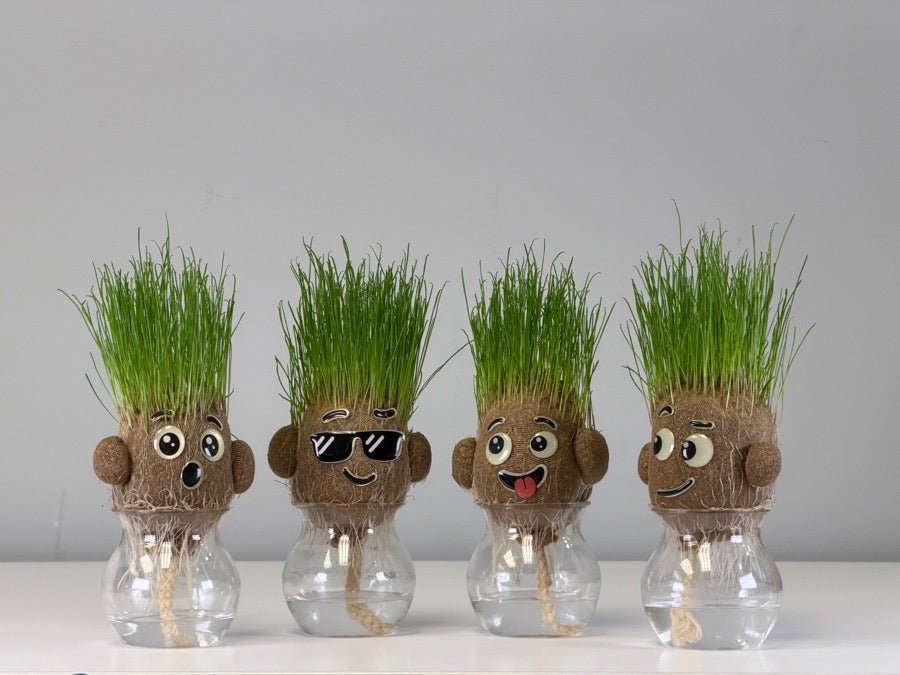
Sixteen Growbies, two of each personality, each in its own box with vase and name card. Here's how to run them with a class.
With 24 kids, run pairs or table groups, or get two packs. Four or five Growbies per table works well: everyone has one within reach and the row never gets crowded.
Soak Monday, green by Thursday, haircut day the next Monday. Starting late in the week means the best part happens over the weekend. Plan around breaks the same way: either start after the break or send them home before it.
Write the child's name (or the pair's) on the bottom of the vase in permanent marker. There are two of each face, and they will get mixed up otherwise.
Two dishpans or mixing bowls of water on a towel, heads in for about an hour, onto the vases before lunch. Fill each vase to just below the rim, wick in the water, head on top.
A tray per table (any lunch tray or baking sheet). Spills stay on the tray and the whole row moves in one go. A windowsill is ideal; any bright spot near a window is fine.
One water helper, a small cup or squeeze bottle, two minutes. Top up any vase that's low. That's the whole routine.
You'll need: kids' scissors, a permanent marker, trays, a cup, the growth log from the printables, and a camera for the morning photo.
Your 14 days
Pick your soak date and the page shows you where you are. Every Growbie grows a little differently, so treat the days as a guide.
-
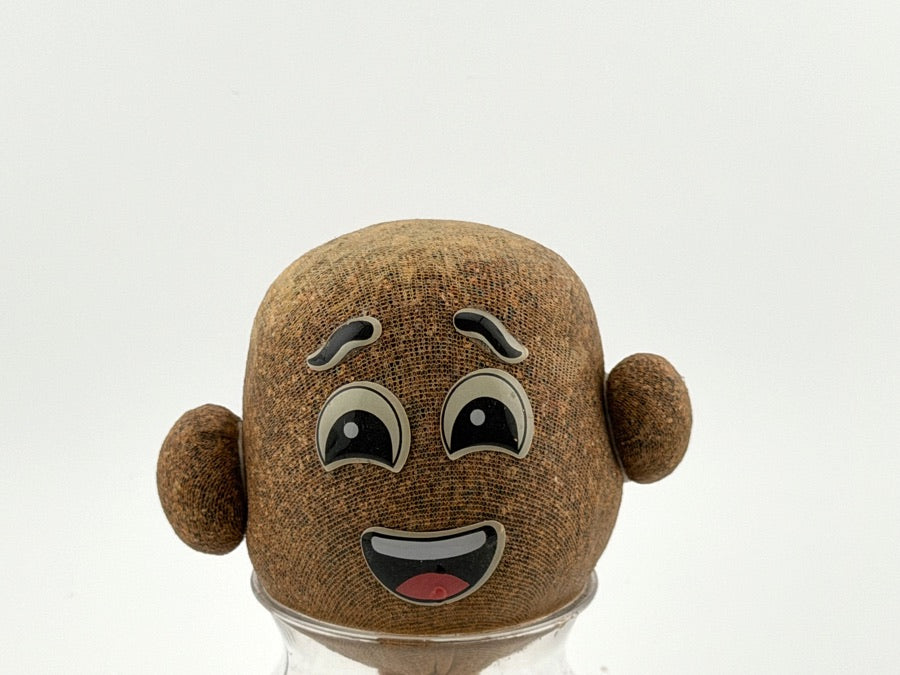 Day 0
Soak the head in water for about an hour. It gets heavy and dark. That's the seed waking up.
Do: Fill the vase to just below the rim, set the head on top, wick down. Bright spot. Give it a name.
-
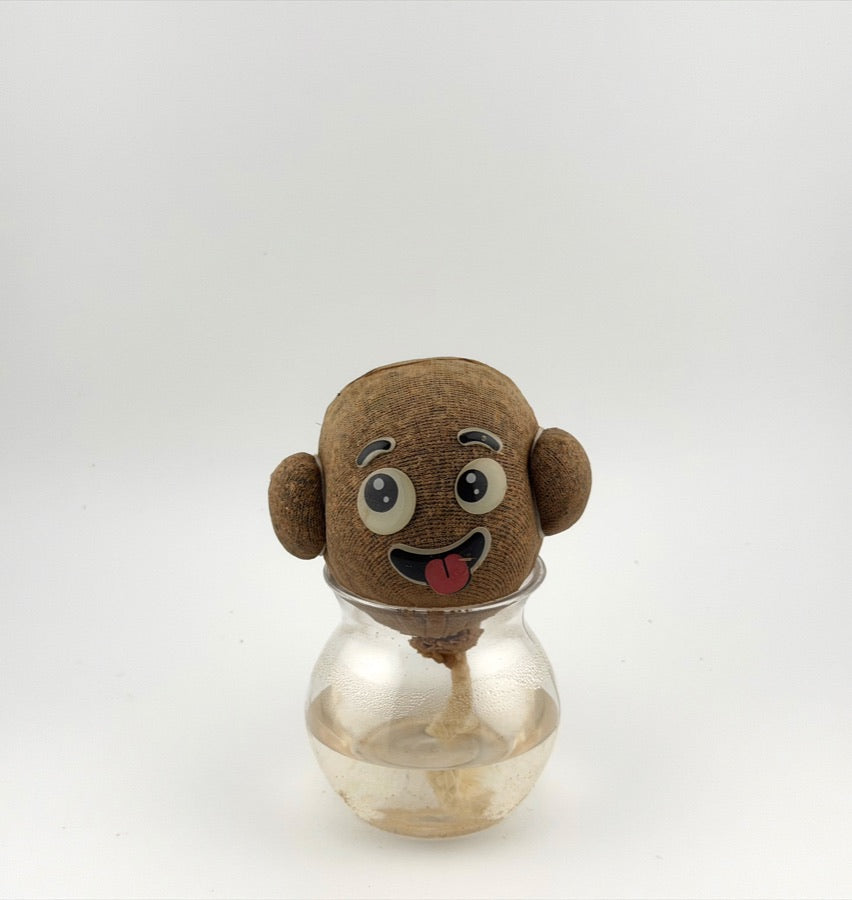 Days 1–2
Nothing you can see. Everything you can't.
Do: Keep water in the vase. Resist poking.
-
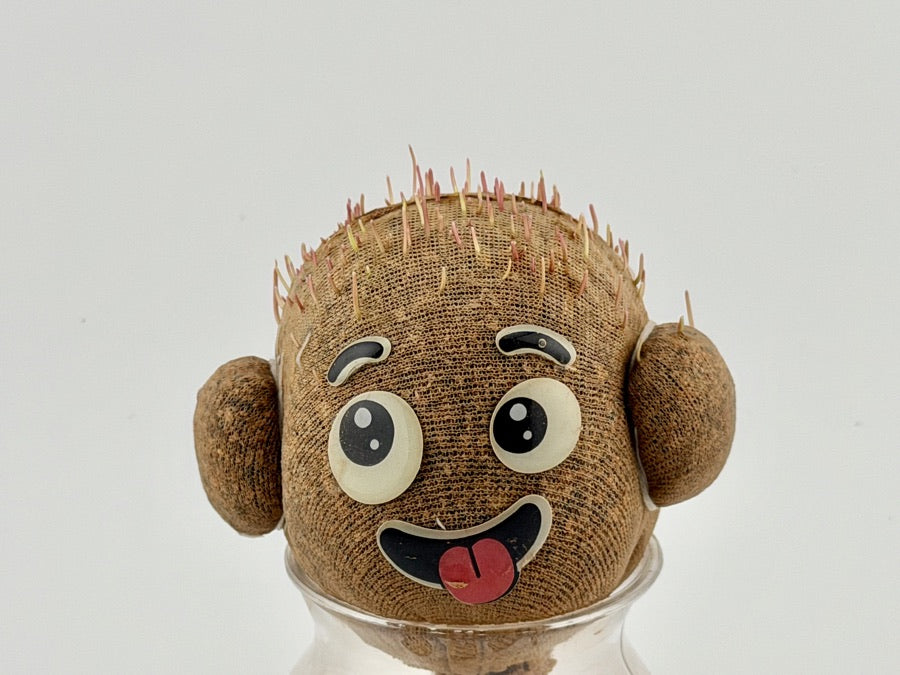 Days 3–4
First green. Tiny shoots all over the head. Every Growbie starts differently; some are early, some take their time. Bare on day 3 is normal, most show green by day 5.
Do: Start the growth log. Measure the tallest blade with cubes, then a ruler.
-
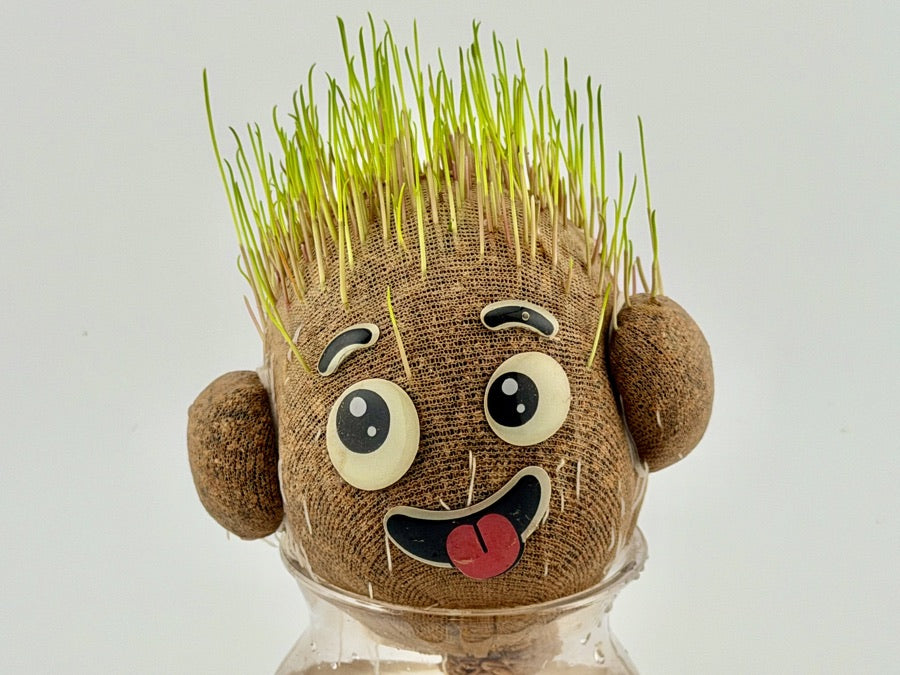 Day 5
The sprouts stand up and turn green. Now it looks like hair.
Do: Measure again. Whose is tallest? Whose sprouted first?
-
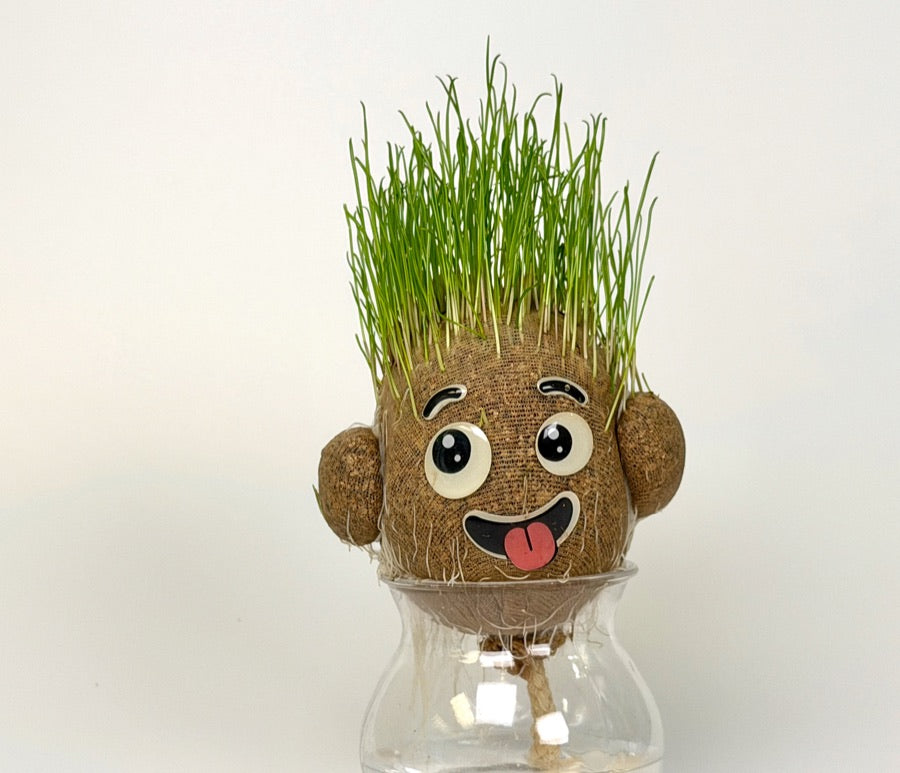 Days 6–7
A real head of hair. Uneven, probably. That's the look.
Do: Haircut day. See below.
-
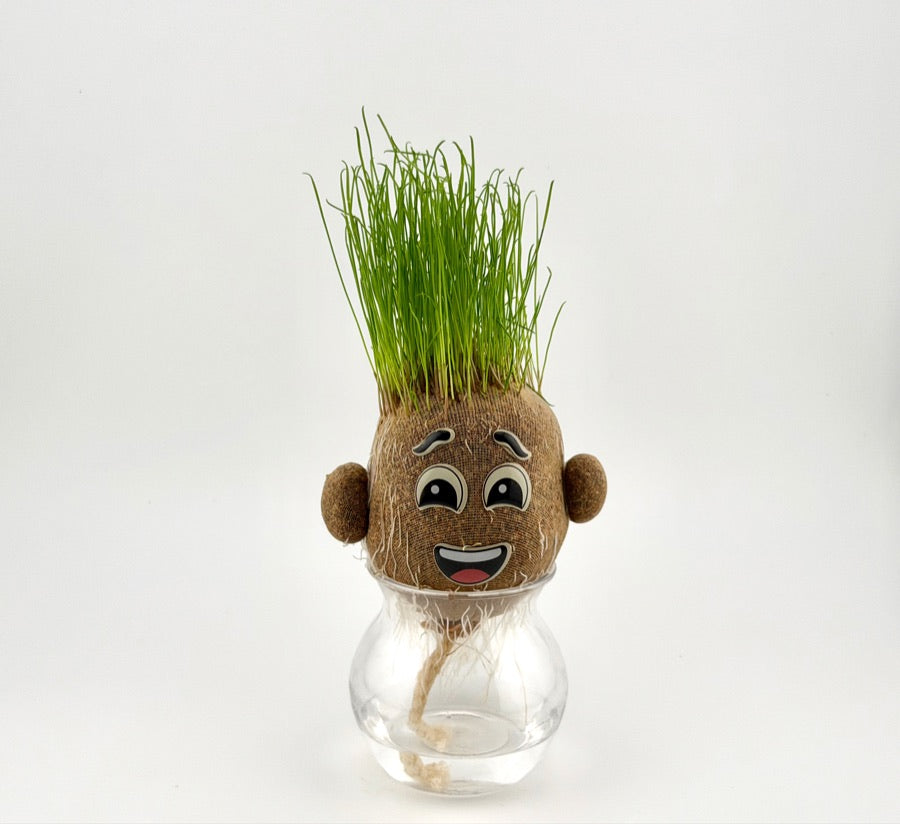 Days 8–14
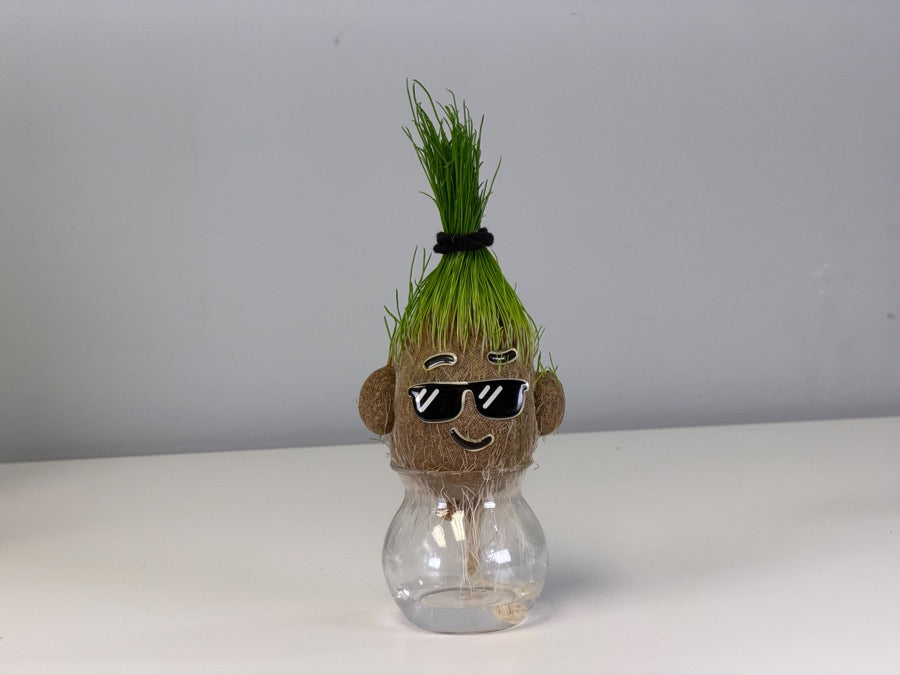
It grows back, and it grows back thicker where you cut. Styles start to happen.
Do: Trim, style, photo every morning.
-
Weeks 3–4
Strong growth continues for about a month on the seed's own energy.
Do: Keep trimming. Keep the water up.
-
After that
It lives on, just slower. No soil, no refill of seed.
Do: Send it home (see Going home, below).
Care, or: what a happy Growbie needs
A Growbie has two needs.
The wick drinks for the head, so the head stays wet the whole time. That's exactly right. Check the vase every couple of days and top up before it runs dry.
A bright spot. A windowsill is perfect. Pale, leggy grass is asking for more light: move it and trim it, and it comes back greener.
Don't shut a wet Growbie away in a closed box or cupboard. It lives out in the open where everyone can see it.
Weekends
Top up on Friday; they're fine till Monday.
Going home
On day 14, or before a break: tip the water out of the vase, pop the head back on, carry it upright in its box, refill at home. Send the parent note from the printables with it. Unsoaked Growbies can wait in the box for weeks; nothing starts until a Growbie meets water.
Haircut day
When. As soon as the hair is long enough to hold, usually day 7. Earlier is fine; it grows back.
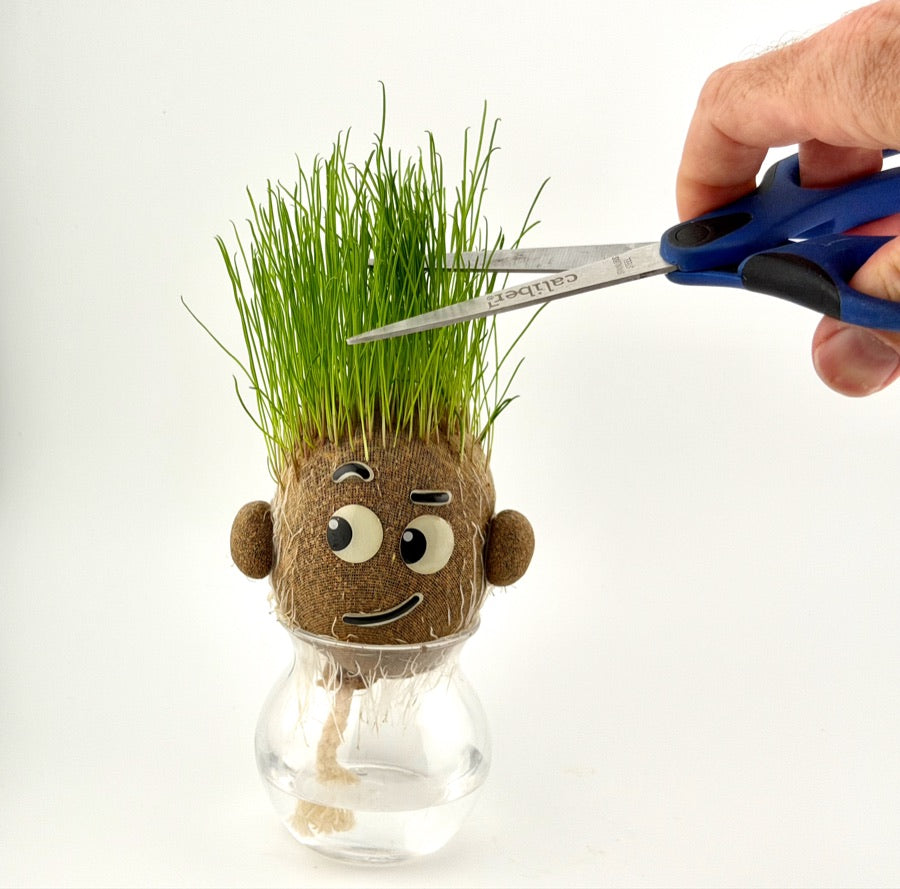
How. Kids' scissors work. Hold the grass tight between two fingers like a barber and cut above your fingers. Small cuts; you can always take more. Cut over the tray. Tape a lock of the clippings into the growth log. Each cut comes back thicker, so by week two the row has sixteen different haircuts on sixteen different faces.
As an event. Line them up on the tray, do one demo cut, let each child cut their own (pre-K: teacher cuts, child chooses the style), hand out the haircut certificate from the printables.
Lessons by age
Fits your living-things / what-plants-need unit and your measurement and data units. The standards sheet in the printables lists the exact codes for the lesson-plan line.
Alive or not alive: the grass is alive, the vase isn't. What does it need?
Waiting is hard: a two-week project with something to see every morning.
Feelings on faces: the eight personalities as a feelings poster, and the morning check-in, "How is your Growbie feeling today?" A yes/no "Green yet?" sticker chart.
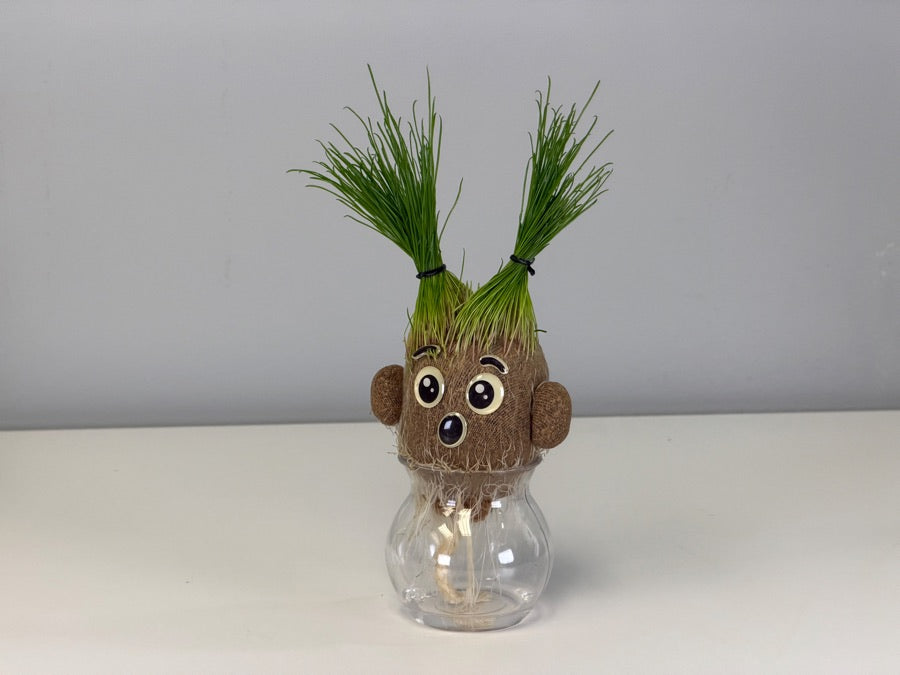
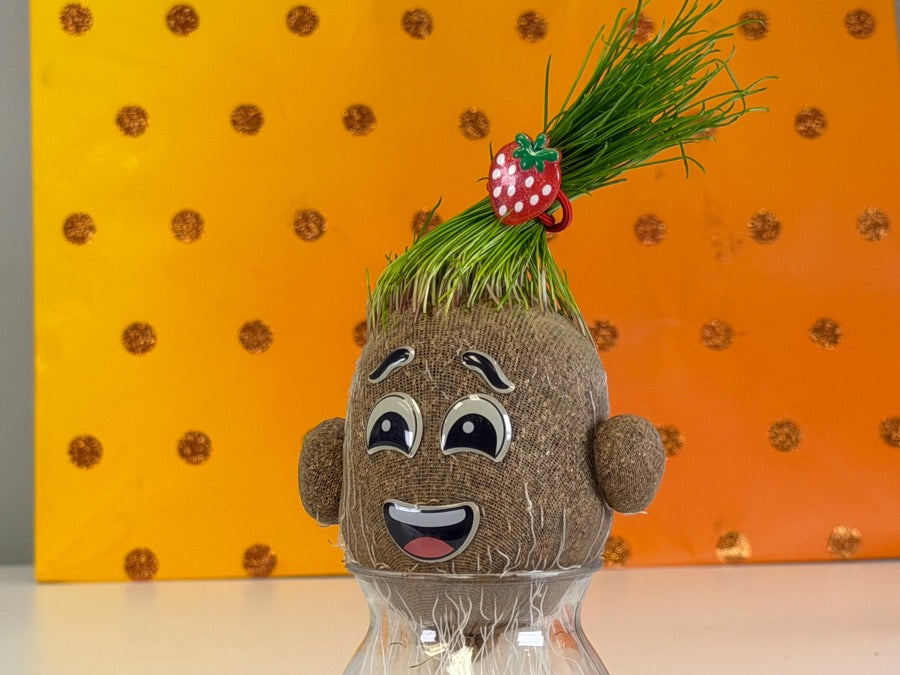
Fine motor: pouring the water. Teacher cuts; child chooses the style. Elastic bands are a small part, so pigtails are teacher-only.
What plants need (water, light), observed daily.
Measuring the tallest blade: cubes, then a ruler; the growth log.
A class sticky-note bar graph: "Which day did yours sprout?"
Comparing: whose is tallest, whose sprouted first, why might that be? Journal with a sentence starter: "Today my Growbie is ___."
Vocabulary: seed, sprout, root, shoot, grow, trim.
The early stages of a plant's life: seed, sprout, leaf, and the slowdown after a month. The grass won't flower in the window, so this is the start of the cycle, not the whole loop.
A fair test: set aside two to four class Growbies so nobody's own one goes in the shade. One on the window and one on a shelf across the room; or one cut on day 7 and one left alone. Predict, measure in centimetres, plot a line graph.
Write it up as claim, evidence, reasoning. The fair-test sheet in the printables has the layout.
Play
Personality first. The grass is the hair.
Name it. Every Growbie comes with a name card in the box. Naming is the first lesson: this one is mine.
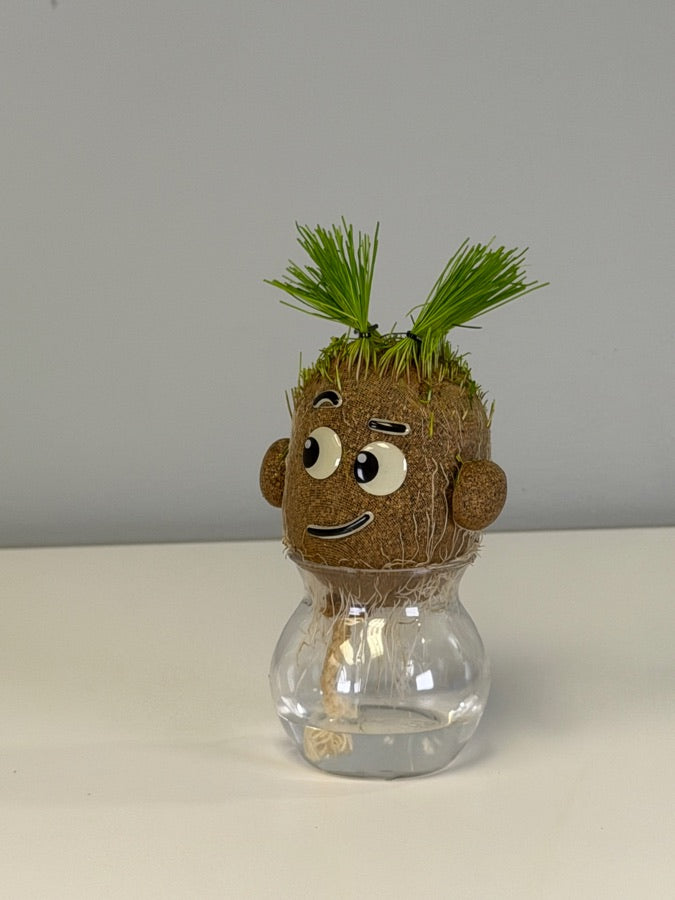
Eight personalities. The happy one, the curious one, the sleepy one, the laughing one, the goofy one, the cool one, the surprised one, the cheeky one. Which one is most like you? Draw its face.
Growbie of the week. Best haircut, fastest grower, most improved, bravest buzz cut.
The row photo. One photo a morning of the whole tray, Growbies only, no faces needed. By day 14 you have a time-lapse and the easiest end-of-unit video you'll ever make. Share it with @MeetGrowbies if you like.
Story time. What did your Growbie do last night? Where did it get that haircut?
Printables
All free, letter size, black and white so they copy well.
- Teacher checklistSupplies, Monday-start timeline, water-helper chart, the two care rules, going home. (PDF, opens in new tab)
- Standards sheetThe codes, for the lesson-plan line and the admin. (PDF, opens in new tab)
- Meet my GrowbieCover sheet: name, personality, birthday (the soak date), a drawing. (PDF, opens in new tab)
- Growth logFourteen boxes for height and a drawing, a corner to tape the first clippings. K–3. (PDF, opens in new tab)
- Growth log, draw-onlyBigger boxes, no writing lines. Pre-K. (PDF, opens in new tab)
- Sprout-day class graphOne sticky note per Growbie on the day it showed green. (PDF, opens in new tab)
- Measuring stripCubes on one edge, centimetres on the other. Print at 100%. (PDF, opens in new tab)
- Name tagsEight personalities, write-on, for the tray. (PDF, opens in new tab)
- Haircut-day certificate"This is to certify that ____ gave ____ its first haircut on ____." (PDF, opens in new tab)
- Parent note, English and SpanishTwo per sheet: what came home, the two care rules, the happy-grow guarantee. (PDF, opens in new tab)
- Fair-test sheet (grades 2–3)Question, prediction, measurements, claim / evidence / reasoning. (PDF, opens in new tab)
Standards, for the lesson-plan line
NGSS: K-LS1-1 (use observations to describe what plants and animals need to survive) · 2-LS2-1 (plan and carry out an investigation into whether plants need sunlight and water, one variable at a time) · 3-LS1-1 (develop models of life cycles; flowering plants in scope).
Common Core math: K.MD.A.1–2 (describe and directly compare measurable attributes) · 1.MD.A.2 (express length as a whole number of units laid end to end) · 2.MD.D.10 (picture and bar graphs, up to four categories).
Florida science (NGSSS): SC.K.L.14.3 (observe plants and animals, describe how they are alike and different) · SC.1.L.17.1 (plants and animals need air, water, food and space) · SC.2.L.17.1 (compare the basic needs of living things) · SC.2.L.16.1 (observe and describe major stages in plant life cycles) · SC.3.L.14.1 (plant structures and their roles, including water transport).
Florida math (B.E.S.T.): MA.K.M.1.1–2 (identify and directly compare measurable attributes) · MA.K.M.1.3 (express length up to 20 units with non-standard objects end to end) · MA.K.DP.1.1 (sort into categories and compare by counting) · MA.1.M.1.1 (measure length to the nearest inch or centimetre) · MA.1.DP.1.1 (represent data with tally marks or pictographs) · MA.2.DP.1.1 (collect, categorise and represent data with tallies, tables, pictographs or bar graphs).
Trouble?
No sprouts by day 6.
Check the vase has water and the wick reaches it, and that the room isn't cold. Give the head a fresh one-hour soak and put it somewhere warmer and brighter. Sprouts usually follow within two days.
Pale, floppy grass.
More light. Move it, trim it.
Dark, damp-looking head.
Normal. A wet head is a working head.
Knocked over.
Refill the vase, set it back, no harm done.
Dried out over a break.
Soak again for an hour. If it's gone past saving, the happy-grow guarantee has you covered: if a Growbie doesn't grow, we send a new one, no questions. How it works.
For parents
Your child came home with a Growbie. It grows real grass hair and gets haircuts, and it needs two things: a bright spot, and water in the vase so the wick can drink (check every couple of days). Give it a haircut whenever the hair gets long. It grows strongly for about a month, then slows down. Ages 3 and up: it has small parts. If it doesn't grow, tell us and we'll send a new one. Everything else is on this page.
Need more?
Another pack for the second class, or one for home: the Classroom Pack lives on the classroom page. Shops find us on Faire.
WARNING: CHOKING HAZARD — Small parts. Not for children under 3 yrs. Ages 3+. Adult supervision recommended for trimming. Contains viable grass seed, not for consumption.